
Marketing for Schools
Marketing for schools isn't advertising — it's making sure the families who would love your school actually find it, trust it and choose it. With funding following pupil numbers, your school's story has never mattered more. Justin Smith brings a rare mix: a private-sector marketing career, then 20+ years inside schools.
Key takeaways
- School funding follows pupil numbers — so admissions, reputation and marketing are now financial issues, not cosmetic ones.
- A school marketing strategy is a plan, not a logo: brand, website, admissions journey, communications and community, working together.
- Most school marketing fails through inconsistency, not lack of effort — the fix is strategy before spend.
- Prefer to build the skill in-house? There's a masterclass and an online course for that.
- You work directly with Justin Smith — private-sector marketer turned school business leader, ISBL Fellow.
- Good marketing pays twice: it fills places and makes staff recruitment easier.
What Is Marketing for Schools?
School marketing is the planned work of shaping how your school is seen — by prospective parents, current families, staff you want to recruit, and the community around you. It covers your brand and story, your website and social media, your prospectus and open days, and the everyday communications that quietly build (or erode) trust.
It matters now for a hard, practical reason: money follows pupils. Falling rolls in many areas mean schools are competing for a smaller cohort, and every family that chooses elsewhere takes several thousand pounds of annual funding with them. Education marketing has stopped being optional — even for schools that have never had to think about it.
And it's different from business marketing. Parents aren't buying a product; they're placing their child. Trust, warmth and evidence matter far more than slogans. The schools that market well don't shout the loudest — they tell a consistent, true story everywhere a parent looks.
Marketing, admissions and reputation — the same conversation
A school marketing strategy joins up three things schools often treat separately:
- Admissions — the journey from "never heard of you" to first-choice application, and where families fall out of it.
- Reputation — what parents say at the school gate and in local Facebook groups, and how the school responds when things go wrong.
- Communications — newsletters, website news, the prospectus, signage, and how consistently they all sound like your school.
Get those three pulling in the same direction and marketing stops being a bolt-on job nobody owns. (Marketing also feeds the money side directly — strong community relationships unlock income generation and sponsorship too.)
The school marketing year — timing matters
School marketing has a rhythm, and working with it beats working against it:
- Autumn term — open day season: tours, follow-up and conversion. This is where the year is won, and where preparation over the summer pays off.
- Spring term — application deadlines and offer days: reassurance communications for families who chose you, and warm contact for those still deciding.
- Summer term — story-gathering season: results, events, sports days and leavers' stories that become next year's content, plus website and prospectus refresh time.
Schools that plan the year this way stop scrambling before every open evening — and their communications feel calm and confident because they are.
Measuring school marketing — without drowning in data
You don't need a dashboard; you need five numbers, tracked termly: first-preference applications, open day attendance and conversion, website enquiries, pupil roll against capacity, and where new families say they heard about you. If a marketing activity can't plausibly move one of those, question it. Measurement turns marketing from a leap of faith into a school-improvement conversation governors can engage with.
Primary, secondary, or trust-wide
The principles hold at every scale, but the emphasis shifts. Primaries live and die by the school-gate story and local word of mouth. Secondaries fight a genuine choice battle where open evenings and digital presence decide outcomes. Multi-academy trusts add a layer: a trust brand that adds value without flattening each school's identity — central messaging with local voice. Justin works across all three, most often with the school business professionals who end up owning marketing alongside everything else.
What a School Marketing Strategy Covers
Five pillars, one story. A strategy doesn't need all five perfect — it needs them consistent, prioritised and owned by someone.
Use the five below as an honest self-audit: score your school 1–5 on each, and the lowest score is usually where next term's effort belongs.
Brand & Story
What your school stands for, in words parents actually use. School branding is the promise; everything else is proof of it.
Website & Digital
Your website is the new front gate — most parents judge before they visit. Clarity, warmth and up-to-date content beat flashy design.
The Admissions Journey
From first search to first day: open days, tours, follow-up and conversion. Small fixes here move pupil numbers directly.
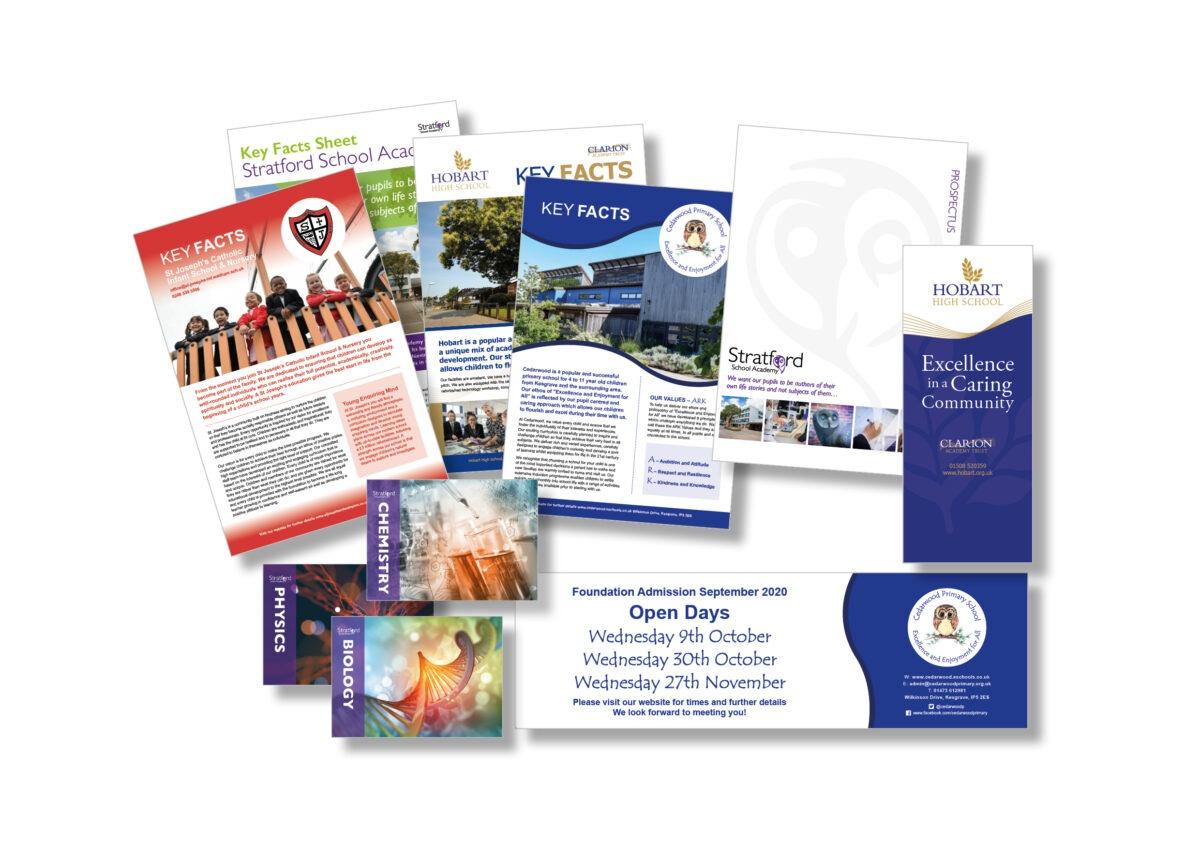
Communications & Prospectus
Newsletters, a school prospectus that earns a second read, and consistent messages across print and digital.
Community & Reputation
The school-gate story, local press, partnerships and how you handle the difficult weeks — reputation is managed, or it manages you.
Why School Marketing Usually Fails
Not through lack of care — through lack of a plan. Marketing gets done in stolen moments by whoever has capacity: a new logo one term, a social media push the next, a prospectus rewrite when the old one runs out. Each piece is fine; together they don't add up to a story, and the budget delivers less than it should.
The other failure is invisibility: schools genuinely excellent at something — SEND provision, music, pastoral care — that no prospective parent could discover without visiting. Your USP only works if it's visible. Justin's written more on this in Marketing Matters: why your school's brand is key to growth.
The fix is sequence: strategy first, then messages, then channels, then spend. Doing it in reverse — spend first — is how marketing budgets disappear without moving a single application.
One more quiet truth: school marketing isn't only about pupils. The same story that convinces parents convinces staff — and in a recruitment crisis, a school that looks alive online fills vacancies faster and holds people longer. Weak marketing costs twice.
How Justin Helps Your School Get Chosen
School marketing consultancy shaped to your situation — from a one-off strategy review to hands-on support through an admissions cycle. You work directly with Justin throughout; fees are flexible and agreed up front, so get in touch to talk it through.
It starts the same way every time: an honest look at how your school is currently seen, where families drop out of your admissions journey, and which quick wins would move the needle this term — then a plan your own team can run, with Justin alongside as much or as little as you need.
What you actually get: a written strategy on a page (not a 60-slide deck), a message framework your staff can use, a prioritised action list with owners and dates, and honest advice about what not to spend money on. Everything is built to survive contact with a real school week.
Marketing Review & Strategy
A clear-eyed audit of your brand, website, admissions data and communications — then a prioritised school marketing strategy your team can actually deliver.
Brand & Messaging
Finding the story that makes your school distinctive and putting it into words, imagery and a prospectus parents keep — like the rebrand work Comberton Primary School "are thrilled with".
Admissions & Open Days
Turning lookers into applicants: open day experience, tour training, follow-up sequences and conversion tracking through the admissions cycle.
Marketing Training
Build capability in-house with the Marketing Your School Masterclass or the on-demand Marketing Essentials course.
Schools That Found Their Story
From village primaries to multi-academy trusts — real schools, verified outcomes.
Marketing results are harder to attribute than a grant cheque — so these focus on what schools themselves say, and on the track record behind the advice. Outcomes vary by school and context.
Marketing, communications and income work across primaries, secondaries, colleges and MATs since 2017.
Justin led business management in three large secondary schools before advising — he's run admissions pressure from the inside.
Justin at Chameleon Consultancy has provided a fantastic service for our school. He has brought together the ideas and designs from our children, families and school community to create an inspiring logo and slogan that fits us just perfectly. He has been generous with his knowledge and expertise in branding and marketing and really helped us to shape the identity of our school. We are thrilled with the final result.
Deena Frost
No guarantees implied — outcomes vary by school, funder and project.
Marketing for Schools: FAQs
How do I market my school?
Start with strategy, not spend: agree what makes your school genuinely distinctive, make sure your website and prospectus say it clearly, fix the leaks in your admissions journey, and communicate consistently all year — not just before open day season.
What should a school marketing strategy include?
Five things: your brand and story; your website and digital presence; the admissions journey from first search to application; communications including the prospectus; and community reputation. Plus an owner, a calendar and a small, realistic budget.
How can we increase school admissions?
Map where families currently drop out — do they not find you, not visit, or visit and choose elsewhere? Each leak has a different fix. Most schools discover the problem isn't awareness but conversion: families visit and never hear from the school again.
Do small schools really need marketing?
Small schools need it most: a handful of pupils either way changes the budget materially. The good news is small-school marketing is mostly consistency and community — which costs time and clarity, not money.
What does school marketing consultancy cost?
It depends on scope — a strategy review is very different from a year of admissions support. Fees are flexible and agreed up front; contact Justin for a straightforward conversation first.
Who does the work — an agency team?
No. You work directly with Justin from first conversation to delivery, often alongside your own office and leadership team. Where specialist production is needed (design, print, web build), he'll say so plainly and help you brief it well.
Is this only for schools with falling rolls?
No — full schools use marketing to protect their position, support staff recruitment, strengthen community ties and underpin income generation. Reputation work is cheapest when things are going well.
What makes a good school prospectus?
Parents' questions answered in parents' order: is my child safe, will they be happy, will they achieve? Real photographs of real pupils, short warm copy, and evidence over adjectives. A good prospectus works in print and as a PDF from your website — and it agrees with what visitors see on the day.
Should our school be on social media?
Only where your parents actually are — for most schools that's one or two channels done consistently, not five done sporadically. Social works best as proof of the story your website tells: everyday moments, celebrations and the people behind the school.
How long before marketing makes a difference?
Quick wins — website clarity, open day follow-up, consistent communications — show within a term. Reputation and admissions shifts build over one to two admission cycles. That's why strategy beats campaigns: it compounds, while one-off pushes fade.
Let's Tell Your School's Story
No pressure and no jargon — a straightforward conversation about how your school is seen, and the shortest path to being chosen more often.